
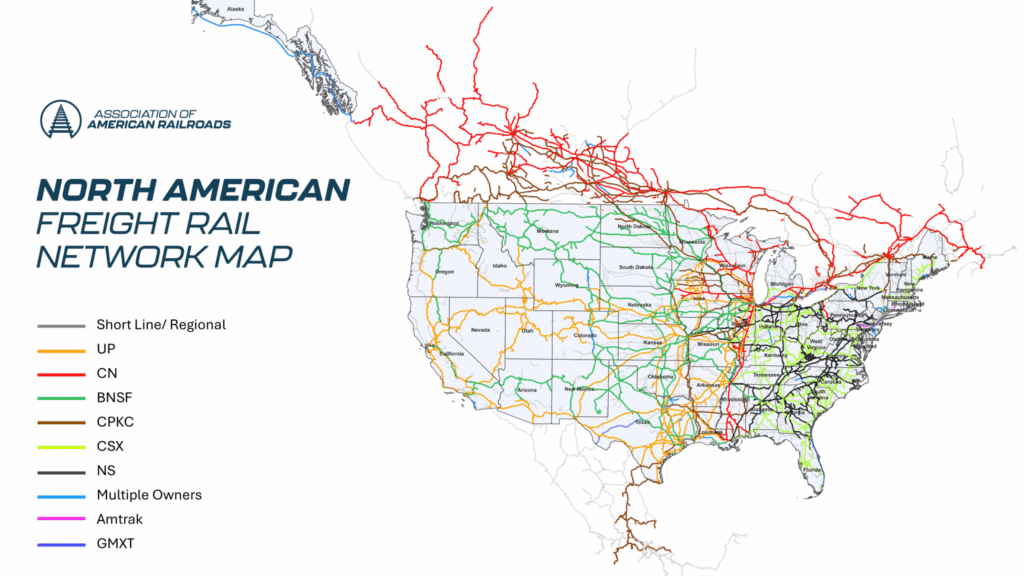

The proposed Union Pacific–Norfolk Southern merger could reshape America’s rail network for generations. Mergers between major freight railroads often trigger service cuts or track closures, changes that could reduce passenger train service for communities that rely on rail. As regulators push back on an incomplete filing, these potential impacts underscore why passenger rail and the communities it serves must remain central to the review.
For many Americans, passenger rail is more than just transportation. It connects families, enables workers to reach their jobs, and links small towns to the broader economy. A proposed merger between Union Pacific and Norfolk Southern would consolidate freight control over vast portions of the rail network, giving a single operator power over passenger rail access, reliability, and future expansion. If left unchecked, this multibillion-dollar deal could reshape the national rail network in ways that undermine mobility and economic opportunity for the communities that rely on it most. Protecting and strengthening passenger rail must remain a central focus as regulators review this historic consolidation.
The merger process is now formally underway, but not without early warning signs. On January 16, the Surface Transportation Board (STB), the independent federal agency that regulates freight railroads and oversees major rail mergers in the public interest, rejected the railroads’ initial 6,692-page merger application as incomplete. The filing, submitted in December, failed to include adequate information on post-merger market share, omitted the full merger agreement, and improperly addressed control of key rail assets in St. Louis. While the railroads have indicated they will refile with the required information, the decision demonstrates that the STB will not simply waive applications without rigorous review.
As this historic proposal moves forward, careful scrutiny is essential. Mergers between large freight railroads are closely reviewed by regulators because consolidation can concentrate control over shared tracks and produce long-lasting impacts on passenger rail service reliability and expansion prospects. The Board’s early action reinforces the importance of a thorough, transparent process that fully accounts for the merger’s real-world impacts.

Lessons from past mergers
The scale of the Union Pacific and Norfolk Southern merger is staggering. Together, these two railroads cover massive swaths of the country, hosting more than half of Amtrak’s state-supported and long-distance routes. Millions of passengers, from daily commuters to tourists exploring small-town America, could be affected. For towns such as Lafayette, Indiana, or Tuscaloosa, Alabama, where trains are often the primary non-highway connection to larger cities, any delays, reduced schedules, or even canceled routes could have real consequences for communities. Residents could struggle with limited train service and find it harder to access essential services.
History provides a cautionary tale.
Past Class I railroad mergers have often prioritized freight efficiency over passenger service, resulting in job cuts, safety compromises, and higher costs. By contrast, when Canadian Pacific acquired Kansas City Southern, the Surface Transportation Board approved the merger only after requiring safeguards for passenger rail. These included a seven-year oversight period by the STB, requirements to support Amtrak, and guarantees that freight operations would not block passenger service growth.
The lesson is clear: mergers can work, but only if the public interest is deliberately protected.
The public interest must come first
This is why the Surface Transportation Board’s review process is so critical. Passenger rail serves the public good, and the voices of riders, local governments, and advocacy groups must be at the center of their evaluation. Regulators must ask hard questions. Will service remain reliable? Will there be continued opportunities to expand passenger rail? Will rural and mid-sized communities lose access to trains they depend on? The answers will determine whether this merger strengthens the national rail network or undermines it.
The stakes extend beyond daily convenience. Passenger rail is a key driver of regional economies. Consider the Amtrak Crescent, which links New Orleans to New York and passes through small towns such as Tuscaloosa, Alabama, and Clemson, South Carolina. For these communities, the train is a critical economic artery supporting tourism, commerce, and connectivity. If freight consolidation leads to bottlenecks or the deprioritization of passenger trains, these towns could lose not only rail service but also vital economic opportunity.
A critical moment for passenger rail
As the railroads prepare to refile their application, communities, commuters, and advocacy organizations are watching closely. They expect a thorough and independent review. This is a rare moment to shape the future of America’s passenger rail network and ensure it works for interstate commerce, shippers, and the passengers it serves, not just freight rail shareholders.
This merger is more than a corporate transaction; it is a potential turning point for the nation’s freight and passenger rail system. Together, Union Pacific and Norfolk Southern control over 50,000 miles of track across the country, and this merger would further shrink the already concentrated network of Class I railroads.
Done carefully, it could support growth and efficiency. Done carelessly, it could limit mobility, weaken communities, and undermine decades of investment in passenger rail. Protecting passenger rail is not just a policy priority, but a public imperative. The Surface Transportation Board has a responsibility to safeguard communities and ensure America’s trains remain reliable, accessible, and ready for the future. The stakes could not be higher.
The post What’s at stake for passenger rail in the Union Pacific–Norfolk Southern merger appeared first on Transportation For America.