

This Congress is focused on how federal dollars go out the door in the next surface transportation reauthorization, and it looks like states might win big time. But with a track record like theirs, why shouldn’t Congress consider who else might use their money better?
If the tone and policy goals uplifted by the current committee chairs authoring the Infrastructure Investment and Jobs Act’s sequel have been any indication, the next surface transportation reauthorization bill is likely to be a boon for state DOTs. In the House, Transportation and Infrastructure Committee Chair Sam Graves has stated that the bill will get “back to basics,” ensuring the federal program steps back from bike lanes and pedestrian paths and focuses more on laying asphalt for roads. Environment and Public Works Chair Shelley Moore Capito, Graves’s functional equivalent in the Senate’s committee in charge of drafting authorizing language for highway programs, is of about the same opinion on the direction of the program, with her focus on streamlining the many programs created by the IIJA and increasing states’ flexibility.
Their priorities overlap well with the wishlist that state DOTs have for this upcoming reauthorization. Other than asking for a huge increase in funding, their primary goals are to reduce accountability wherever possible and increase their already significant flexibility to spend as they see fit. One way they may do the latter is by having the IIJA’s competitive discretionary grants, which were made available to local entities like towns, cities, and counties, absorbed into highway formula programs that they directly control. This (likely) scenario for federal policy would result in a net loss of available funding for localities while also increasing the bottom line for state DOTs.
What the BASICS Act does
It seems that localities see this writing on the wall for competitive grants. Earlier this month, the Bridges and Safety Infrastructure for Community Success (BASICS) Act was introduced in the House on a bipartisan basis by Representatives Bresnahan (R-PA-08) and McDonald-Rivet (D-MI-08).
The bill is supported by the Local Officials in Transportation (LOT) Coalition (made up of cities, counties, and regional planning organizations), and as such, the BASICS Act seeks to ensure that a greater portion of the massive federal transportation program’s funding and programming authority ends up in their control, rather than just with state DOTs. Contrast this with the American Association of State Highway and Transportation Officials (AASHTO), which represents state DOTs and is advocating for an increase in both the total funding that goes to state DOTs and the overall share of funding going to them as well.
How the bill shifts control and adds accountability
In short, the BASICS Act would shift how federal highway formula dollars are suballocated and programmed to make funding more accessible to localities.
It would do this by moving money and increasing the portion that flows down to localities in existing FHWA programs, increasing the federal share for planning dollars for regional planning organizations, and clarifying local entities’ influence over project selection.
However, what is most interesting about the bill is how it addresses safety issues and accountability. Under current federal transportation policy, states can transfer up to 50% of any federal highway formula program’s funding to other highway programs, including out of safety programs like the Highway Safety Improvement Program.
The BASICS bill would require that any state DOT intending to transfer safety dollars out to another program must first ensure that localities have a chance to compete for those funds themselves, eliminating a loophole that DOTs have used to siphon literally hundreds of millions of dollars out of the Highway Safety Improvement Program into more flexible programs.
State DOTs want more money and fewer guardrails
AASHTO opposes the BASICS Act. Citing internal analysis, they find the bill would change how funding from the Highway Trust Fund is distributed, shifting the ratio from 85 percent for state DOTs and 15 percent to localities, to a new 75/25 percent state and local split. For reference, AASHTO wants to increase the portion of the HTF that goes to state DOTs to 95 percent. Considering that the discretionary grants from the IIJA that many local entities used may be disappearing, AASHTO’s proposal would likely make federal funding inaccessible to localities.
AASHTO’s article argues against the LOT Coalition’s proposal, highlighting three consequences from the change:
- Program delivery would be fragmented.
- Obligation rates would slow down.
- State-owned roads and bridges would receive less federal funding
All of these results should be viewed as worthwhile trade-offs for increased accountability or outright benefits. When state DOTs have transferred hundreds of millions of dollars, on net, out of the Highway Safety Improvement Program after record-breaking traffic fatality levels, a small shift in responsibility could be the kind of disruption needed to actually improve outcomes.
It’s also worth interrogating what type of program state DOTs are actually delivering today, especially when AASHTO is calling for the reauthorization bill to “eliminate or reduce all federal regulatory burdens that are not explicitly required in law, including performance measures.” With the vast majority of funding flowing directly to them, State DOTs are, in effect, in charge of the federal highway program. If they are to claim credit for successes, they need to be held accountable for their failures. While local-led planning and project delivery could get things wrong just as much as state DOTs do today, they may also end up being more accountable to the priorities and nuances of communities, based purely on their proximity. When your city or county misspends money or fails to take care of obvious needs, it’s a lot easier to hold them accountable than a faceless, faraway, typically unelected state transportation agency.
As an indication of just how far away they are from thinking about outcomes, one of AASHTO’s top talking points revolves around how good they are at spending other people’s money quickly. Obligation rates, meaning simply the speed at which federal dollars are spent by a recipient, do not imply any measurement of success based on outcomes. If anything, the use of obligation rates as a metric should be scrutinized. What are you getting for that spending? Are results improving at unprecedented rates? Or are DOTs just prioritizing funding any investment as fast as possible?
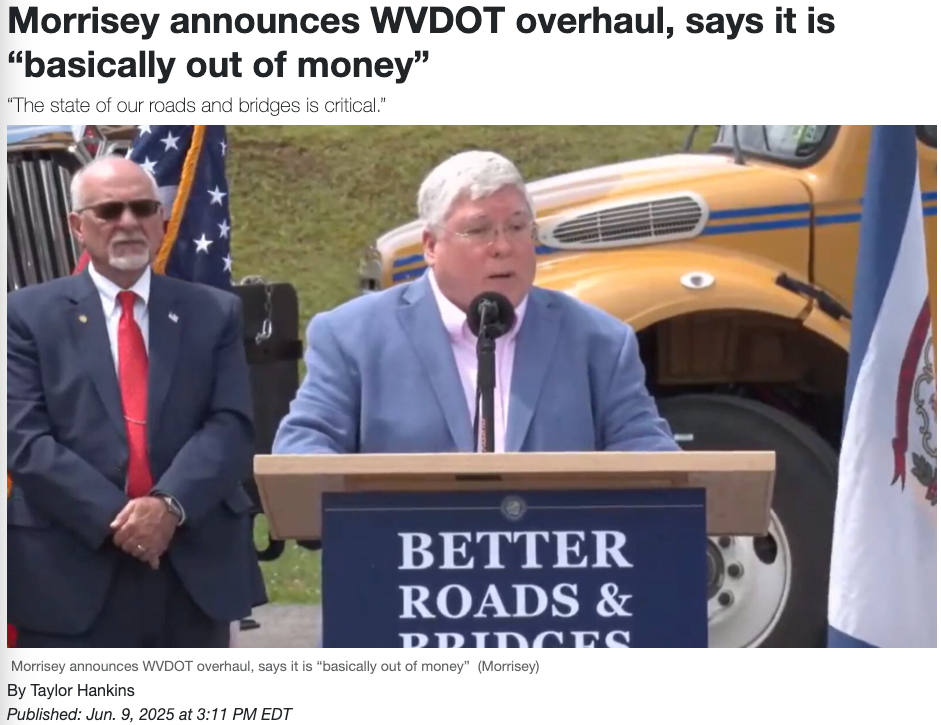
Further, with the ability to wield multi-billion-dollar, state-supported budgets in addition to federal sources, state DOTs have significantly greater financial resources at their disposal compared to other types of project sponsors. However, despite those resources, it’s not uncommon for state DOTs to spend so much on wasteful projects that they effectively bankrupt themselves and leave billions of dollars of federally supported assets at risk of disrepair. Meanwhile, it is common knowledge that most local budgets have to be balanced.
Locals may indeed have slower obligation rates for federal funds, but that could just as much be a result of USDOT’s yo-yo approach between administrations in their handling of discretionary grants and the sparse federal dollars they had access to over the past few years. In some cases, it may be that their state DOT itself is the barrier to local-led projects’ obligations.
With challenges swinging between managing an overwhelming number of requirements and funding opportunities under the Biden administration, to dealing with vast uncertainty, a lack of communication, and distrust in federal partners over the past year under the current paradigm, it is easy to attribute external factors to the expediency of locally-led projects’ obligation rates.
Congress shouldn’t put all its eggs in one basket
Finally, it’s hard to overstate how much money state DOTs would likely still receive under this proposal, especially if existing competitive grant programs are cut to provide more money for highway formula programs.
It’s also hard to see why state DOTs should receive more funding in the first place, especially when they have failed to significantly improve on the real basics over the years, like road maintenance and safety. Besides, even judging this from the user-pays lens currently favored by Congress, recent analyses from the Brookings Institution show that the existing funding flows aren’t all that equitable in the first place, with localities receiving less federal funds than what they necessarily pay into the Highway Trust Fund, considering how much time people spend driving on local roads.
If Congress is looking to consolidate the number of federal transportation programs, it should not put all its eggs in one basket by entrusting state DOTs with responsibility over nearly all of the federal transportation program’s funding. Giving other local-led entities continued participation in the federal program is a good hedge against state DOTs’ records of perpetually needing increased funding to achieve the same poor results for spending. Congress should ensure that all its recipients of federal funding are held accountable for results.
The post State DOTs should spend their safety money on safety or hand it over to locals appeared first on Transportation For America.